

Blog
Fire alarm systems explained for small commercial buildings

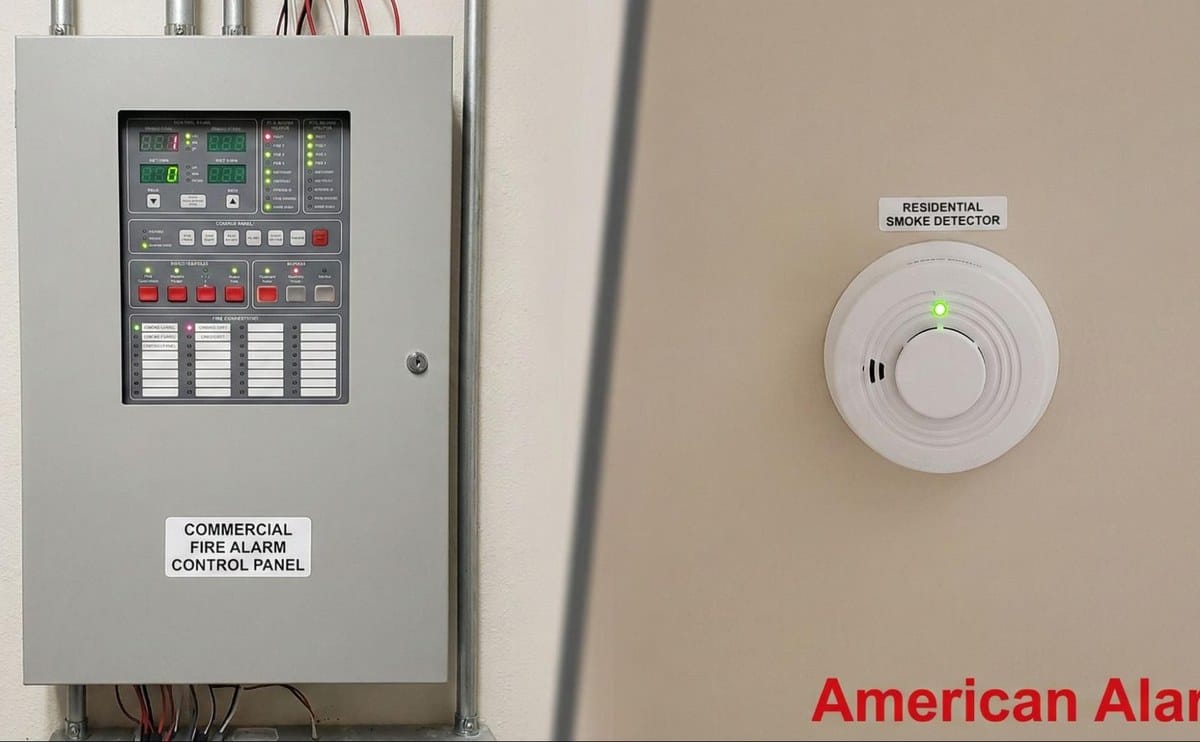
A fire alarm is not décor. It is early warning so people leave and responders know where to look. Small shops, clinics, churches, and two-floor offices in Kenya often delay installation until an insurer or landlord demands it—then rush the wrong panel and end up with false alarms nobody trusts.
Review options under fire alarm systems, and treat the category as part of overall security planning, not an afterthought taped onto the wall after the fit-out is finished.
If staff silence alarms without investigating because “it always false-alarms,” the system has already failed. Design, detector choice, and training matter as much as the panel brand on the box.
Conventional systems group detectors into zones. When a zone alarms, the panel tells you the area—ground floor shops, first-floor offices—not the exact device unless you walk the zone. That is often enough for small footprints and is usually more affordable to install and maintain. Addressable systems identify each device; they suit larger multi-wing buildings and sites that need precise maintenance logs. Most small commercial tenants start with conventional if the building is compact and budgets are tight. Ask your installer for a simple zone map you can post next to the panel.
Detectors must match the room. Smoke detectors suit offices and corridors. Heat detectors fit kitchens, generator rooms, and dusty stores where smoke detectors false-alarm from cooking or powder. Manual call points go on escape routes at reachable heights, not hidden behind a filing cabinet. Sounders must be loud enough over generators, traffic, and matatu noise outside many Kenyan CBD buildings. Never mix random second-hand devices with a panel that expects a different voltage or protocol; false silence is worse than a nuisance alarm you can investigate.
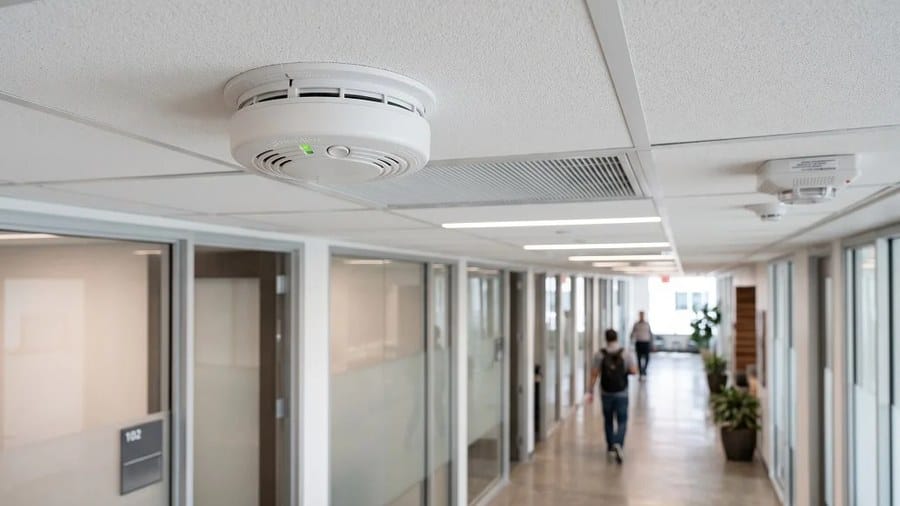
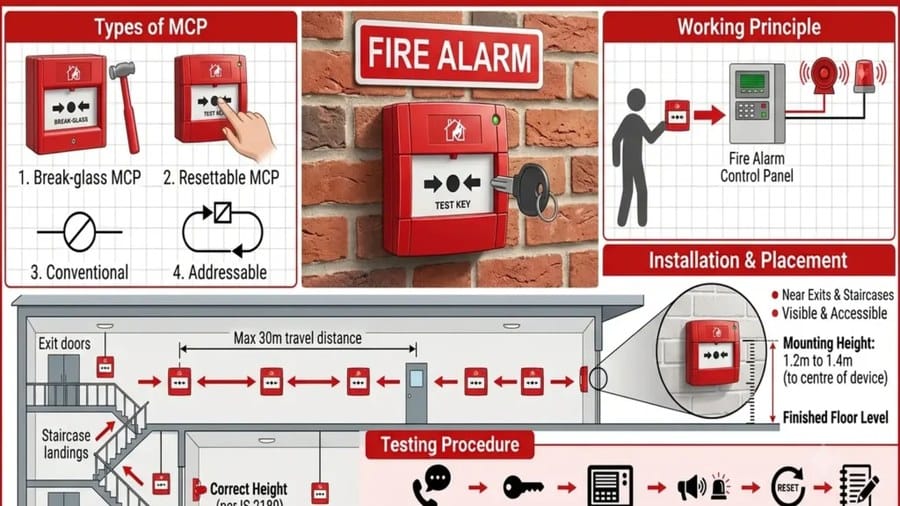
Design the zones with evacuation in mind. Label the panel clearly in English (and another language if your staff need it). Train reception and security on silence, reset, and when to call the fire service. Schedule monthly call-point tests and replace standby batteries on schedule. Dusty environments need more frequent cleaning of detector chambers—especially near unfinished construction or carpentry workshops. Keep a simple log book; insurers and county inspectors often ask for proof that someone is testing the system, not only that it exists.
Coordinate with other life-safety measures: extinguishers, clear exits, and emergency lighting. A loud panel with blocked stairwells does not help anyone. If you already have CCTV or access control, keep fire override paths independent so a card reader failure does not trap people on a staircase. For product browsing, start at fire alarm systems and ask an installer for a zone drawing before you purchase devices in bulk. Buying detectors without a plan is how small sites end up with gaps over storerooms that matter most.
Fire alarm systems for small sites

Ugreen US128 USB 3.0 A-Male to A-Male Cable 3m Black
Original price was: KSh 800.00.KSh 600.00Current price is: KSh 600.00. ex VAT
Ugreen MU105 Silent Wireless Mouse 2400 DPI Moonlight Gray
Original price was: KSh 1,100.00.KSh 800.00Current price is: KSh 800.00. ex VAT
TP-Link Deco X50 AX3000 Whole Home Mesh Wi-Fi 6 System (3 Pack)
Original price was: KSh 43,900.00.KSh 36,000.00Current price is: KSh 36,000.00. ex VAT
HP 65W Type-C Adapter 1HE08AA USB-C Power Delivery
Original price was: KSh 7,700.00.KSh 6,000.00Current price is: KSh 6,000.00. ex VAT
Kensington Universal 3-in-1 2.0 Combination Laptop Lock, 1.8m Carbon Steel Cable
Original price was: KSh 6,500.00.KSh 5,600.00Current price is: KSh 5,600.00. ex VATMatch conventional vs addressable to building size. Place the right detector type in each room. Budget for installation, training, and testing—not only the panel price.
See fire alarm systems at Litmus Kenya and bring a floor sketch so we can help you shortlist a practical small-site package.



Call points + smoke detectors — baseline we were missing on floor 2.
Service the panel yearly. Install without maintenance is theatre.
Zones explained well. Knowing which wing triggered saves panic time.
Small shop — conventional system first. Addressable when we expand.
Good call. Don’t overbuy panels you won’t maintain.